
I remember the day it hit me. I was sitting at my old wooden desk in a cramped corner of my apartment, staring at three different browser tabs, my phone buzzing every two minutes, and a stack of papers that had been there so long the edges were curling. My back ached, my eyes felt like sandpaper, and by 3 p.m. I had accomplished maybe one meaningful thing all morning. That was the moment I realized my desk wasn’t just a workspace—it was quietly sabotaging me. We spend so many hours parked there, thinking if we just push harder we’ll get more done. But the truth is, the little things we do wrong every single day are the real thieves of our output. I’ve spent years tweaking my own setup, talking to friends who work from home or in busy offices, and reading what the actual research says about how our brains and bodies react to desk life. What follows aren’t fancy theories or apps you need to buy. These are five everyday mistakes I see people making right now—mistakes that are costing them hours, energy, and that quiet satisfaction of knowing they crushed their day. Fix them, and you’ll feel the difference faster than you expect.
The first mistake that creeps up on almost everyone is trying to juggle too many tasks at once, right there on your desk. You tell yourself you’re being efficient—answering an email while half-listening to a meeting on speaker, scribbling notes on one project while your mind is already halfway into the next. Sounds productive, right? Except your brain doesn’t actually work that way. There’s this thing called attention residue. When you switch from one thing to another, a little piece of your focus stays stuck on the old task, leaking energy like a slow puncture in a tire. I used to do this constantly. I’d have my calendar open, Slack pinging, a report half-written, and my to-do list glaring at me. By lunchtime I felt exhausted but had nothing solid to show for it. Studies from years back, like the ones out of the University of California, showed that people who constantly switch tasks can lose up to 40 percent of their productive time. That’s not some abstract number. That’s two extra hours a day gone, just because your desk became a circus ring instead of a focused stage.
What makes it worse at a desk is how easy it is to set up the trap. Your monitors, notebooks, sticky notes, and open apps all sit there tempting you to glance, check, tweak. One minute you’re deep in writing a proposal, the next you see an unread email subject line and boom—your train of thought derails. I caught myself doing it so often that I started timing my switches. On a normal morning I’d flip between tasks every seven minutes. Seven minutes! No wonder I felt scattered. The fix isn’t some grand system. It’s boringly simple but brutally effective. Pick one thing—the most important thing—and close everything else. Literally. Shut the tabs, silence the phone, turn the monitor so only that document is visible. I started using a kitchen timer for 25-minute bursts where nothing else exists. At first it felt impossible, like I was missing out on the world. But after a week my output doubled on those focused blocks. The emails still got answered, just later, when I deliberately chose to open that window. And the crazy part? The quality of my work jumped because I wasn’t half-present anymore. If you’re reading this and nodding because your desk looks like a command center right now, try it tomorrow. Just one single-task block in the morning. You’ll finish it faster than you think and walk away feeling like you actually moved the needle instead of spinning your wheels.
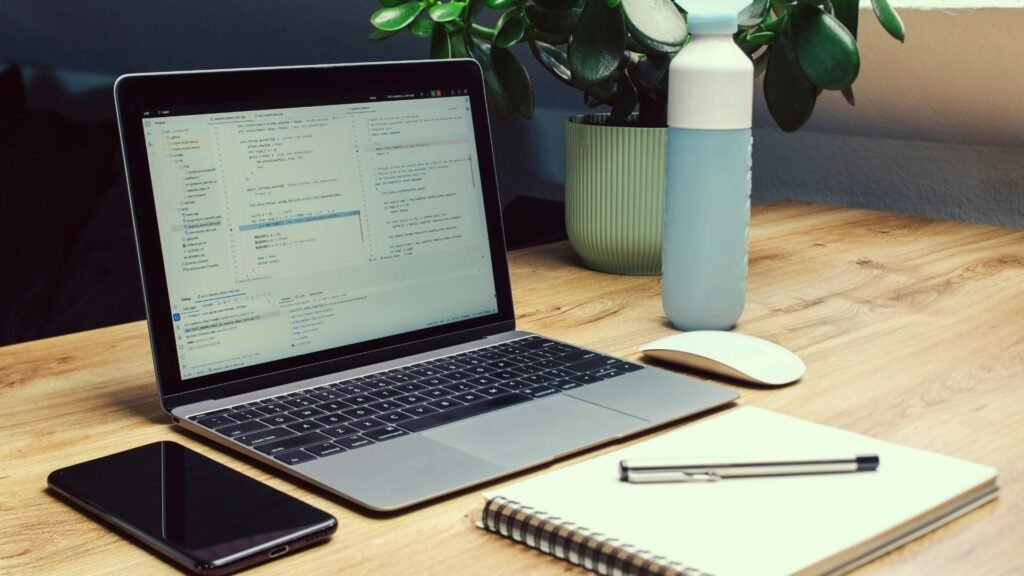
The second mistake is one we all feel in our bodies long before we admit it’s hurting our work: ignoring how our desk is physically set up and letting poor ergonomics drain us dry. You lean forward to see your screen, shoulders hunched, wrists bent at weird angles, chair too low or too high. At first it’s just a little stiffness in the neck by mid-afternoon. Then it turns into headaches, lower back pain that makes you shift every five minutes, and eventually that foggy, irritable feeling that kills concentration. I ignored this for years. My monitor sat on a stack of books at eye level—well, sort of—and my chair was whatever came with the apartment. By evening I’d be rubbing my temples and wondering why I couldn’t push through one more hour. The science here is straightforward and a little scary. When your posture is off, blood flow to the brain dips, oxygen delivery slows, and your muscles burn extra energy just keeping you upright. That energy should be going to thinking, not fighting gravity. Physiotherapists I’ve talked to say that people with bad desk setups report 30 percent more fatigue by the end of the day. Thirty percent. That’s like starting your workday already partway through a marathon.
Fixing it doesn’t require an expensive standing desk or fancy gadgets, though those help if you can swing them. Start with what you already have. Raise your monitor so the top of the screen is at eye level—use a box, a stack of old textbooks, whatever. Your elbows should rest at 90 degrees when typing, and your feet should touch the floor flat. I bought a cheap lumbar cushion from a local market and it changed everything. Suddenly I wasn’t slouching after 45 minutes. I also set a reminder every 50 minutes to stand up, roll my shoulders, and do a quick stretch—nothing fancy, just reaching for the ceiling and twisting gently. The first week felt awkward, like I was interrupting my flow. But the second week I noticed something wild: I wasn’t yawning by 2 p.m. anymore. My thoughts stayed clearer longer. And the pain that used to make me dread long writing sessions? It mostly vanished. If you work from home or in an office where the chair is ancient, take five minutes today to adjust everything. Sit back, feet flat, screen straight ahead. You’ll feel the difference in your shoulders within minutes. Your brain will thank you with sharper focus and fewer afternoon crashes. Small change, massive return.
Third on the list—and this one sneaks up because it feels so normal—is letting notifications and interruptions run the show from your desk. That little red badge on your email, the Slack message popping up, the phone lighting up with a text about dinner plans. Each one seems harmless, but they add up like mosquitoes on a summer evening. Every interruption costs more than the few seconds it takes to glance. Your mind has to re-orient, remember where it was, and rebuild momentum. Researchers who tracked office workers found that after a notification distraction it can take up to 23 minutes to get back into deep work. Twenty-three minutes! Multiply that by the dozen pings you get daily and suddenly half your morning evaporates. I used to keep my phone face-up on the desk “just in case.” I’d tell myself I was staying connected, but really I was training my brain to expect constant novelty. The result? I’d start a report, see a notification, check it, and ten minutes later I was down a rabbit hole of replies that could have waited until lunch.
The desk makes it worse because everything is right there—screen, phone, smartwatch—all within arm’s reach. You don’t even have to stand up to get pulled away. Breaking the habit took me longer than I want to admit. First I moved my phone to a drawer across the room. Out of sight really does help out of mind. Then I turned off all non-essential notifications—email, social apps, even most Slack channels. I created “focus hours” where only my boss’s direct messages could break through. At first I felt anxious, like I was missing critical updates. But after three days the anxiety faded and I started finishing tasks in one sitting. The emails didn’t pile up into disasters; they just waited their turn. I also began batching checks—three times a day max. Morning, after lunch, before wrapping up. The volume of work I got through increased so much that I actually had time to reply thoughtfully instead of firing off rushed one-liners. If your desk currently looks like a Christmas tree of blinking lights and badges, try this experiment tomorrow: silence everything except the absolute musts for two hours. You’ll probably feel a little twitchy at first, but by the end of that block you’ll have accomplished more than you usually do in four scattered hours. The quiet is addictive once you taste it.
Fourth mistake: staying glued to your chair for hours without moving or stepping away. You think you’re being disciplined—“just one more paragraph,” you tell yourself. But your body and brain need rhythm, not marathon sessions. Blood pools in your legs, oxygen levels dip, and your prefrontal cortex—the part that handles focus and decisions—starts to fog over. I used to pride myself on powering through without breaks. I’d sit from 9 a.m. until 1 p.m. straight, then wonder why my ideas dried up and my mood tanked. Turns out there’s solid research on this. The brain’s ability to sustain attention drops sharply after about 50 to 90 minutes. It’s not laziness; it’s biology. Short breaks let your mind consolidate what you’ve done and recharge for the next push. Without them you’re basically running your mental engine on empty.
At a desk it’s especially easy to forget because the work is right in front of you and standing up feels like quitting. I fixed this by borrowing the old Pomodoro idea but making it my own. Twenty-five minutes of focused work, then five minutes of mandatory movement. Not scrolling—actual movement. I’d stand, walk to the kitchen for water, do ten squats in the hallway, or just stare out the window and breathe. Every fourth break I’d take a full ten minutes and step outside if possible. The change was immediate. My afternoon energy didn’t crash anymore. I started noticing that ideas I struggled with in long stretches came easier after a quick walk around the block. My posture improved too because I wasn’t locked in one position for hours. If you’re skeptical, track your own focus tomorrow. Notice when your eyes start glazing or your shoulders tighten. That’s your cue. Set a gentle timer and stand up. Bring a glass of water back with you. Drink it slowly. The simple act of moving resets your nervous system and clears the mental cobwebs. After a week you’ll wonder how you ever thought sitting motionless was the path to more productivity.
The fifth and maybe most underestimated mistake is keeping a cluttered desk that quietly steals your mental bandwidth. Papers scattered, empty coffee cups, random cables, sticky notes from last month, that one pen that doesn’t work but you keep “just in case.” It looks harmless, but every item is a tiny decision your brain has to make—ignore it, file it, worry about it later. That constant low-level noise adds up. Psychologists call it the Zeigarnik effect: unfinished things in your visual field keep nagging at you even when you’re trying to focus elsewhere. I used to think a messy desk meant I was busy and creative. In reality it was making me slower and more stressed. I’d sit down to work and feel vaguely overwhelmed before I even opened a file. Clearing it took effort I didn’t realize I was spending.
I decided to test the theory one weekend. I cleared everything off my desk except my laptop, a notebook, and one pen. The surface looked almost naked. The next Monday I sat down and the difference was startling. No mental inventory needed. I started my first task immediately and stayed in flow longer. I didn’t suddenly become a minimalist monk—I still have a few personal touches—but now everything has a home. A small tray for incoming papers, a drawer that closes for random stuff, cables bundled with ties. At the end of each day I spend exactly three minutes putting things back in place. It sounds trivial, but those three minutes save me twenty the next morning because I’m not hunting for that report or clearing space to write. If your desk currently looks like a battlefield, start small. Pick one corner and clear it completely. Decide where everything belongs. Do one drawer or shelf. The calm that follows is real. Your mind stops scanning for loose ends and starts solving actual problems instead.
Looking back at all five of these—multitasking, bad ergonomics, notification chaos, zero breaks, and desk clutter—I realize they’re connected. Each one feeds the others. When your posture hurts you reach for your phone as a distraction. When notifications pull you out you lose track of time and skip breaks. When your desk is messy the mess reminds you of unfinished tasks and tempts you to switch between them. Fixing one helps the rest. I didn’t overhaul everything overnight. I picked the one that bothered me most—my notifications—and started there. Within a month the others became easier to tackle because I had more mental space. That’s the hidden gift of getting these right: you don’t just do more work; you enjoy the work more. The desk stops feeling like a cage and starts feeling like a launchpad.
These days my setup is simple but deliberate. Monitor at eye level, phone in a drawer during focus time, timer ticking quietly, desk surface mostly clear except for the task at hand. I still slip up—life happens, deadlines pile on, and sometimes I catch myself answering Slack with one eye on a report. But now I notice it faster and course-correct. The difference in how I feel at 5 p.m. versus how I used to feel is night and day. No more dragging myself through the evening wondering where the hours went. Instead I wrap up with actual progress and enough energy left for family, exercise, or just relaxing without guilt.
If you’re nodding along to any of this, pick one mistake today and attack it. Don’t try to fix all five at once or you’ll burn out on the changes themselves. Maybe tomorrow morning you silence your notifications for two hours and see what happens. Or you adjust your chair height before you even open your laptop. Small experiments like that are how real habits stick. And when you feel the shift—when a task that used to take all morning finishes by 10:30 a.m.—you’ll know it was worth it.
Productivity at a desk isn’t about working harder or buying more tools. It’s about removing the invisible friction that most people never even notice. Once you clear those five mistakes, the work flows easier, your mind stays sharper, and your body stops fighting you. You start finishing days feeling accomplished instead of drained. That’s the real win. I’ve watched it happen for myself and for friends who tried the same tweaks. The desk that once held you back suddenly becomes the place where your best ideas live and your best work gets done. So take a look at your own setup right now. What’s one small thing you can change before the day ends? Do that, and tomorrow you’ll already be ahead of where you were today. The difference compounds faster than you expect, and before long you’ll wonder how you ever worked any other way.