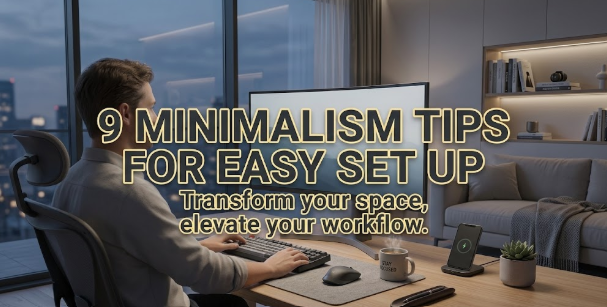
You don’t have to live in a perfectly white apartment, or own five items of clothing, to be a minimalist.
That’s the biggest misconception about minimalism — that it’s extreme, all-or-nothing, or only doable for people who have tons of free time. The truth? It is simply making space for what matters and eliminating the rest.
And the good news is that you can begin today, using what you already possess.
Nine easy setup minimalism tips for real life. They’re practical, they’re beginner-friendly, and they actually work — regardless of whether your room is a mess or you’ve got too much going on.
Let’s get into it.
What Minimalism Doesn’t Mean (It’s Not What You Think)
Before we get into the tips, though, let’s clarify one thing.
Minimalism doesn’t mean owning nothing. This doesn’t mean sitting in a sterile environment devoid of character. It’s not about punishing yourself or sacrificing the stuff you like.
Minimalism means being intentional. It means deciding what deserves your space, your time, and your energy — and saying no to everything else.
Everything becomes simpler when you design your life like that. Your home becomes calmer. Your mornings feel lighter. Your mind has more space available.
That’s the power of these tips for minimalism. They’re not just about stuff. They’re about creating a life that you actually enjoy.
Tip 1 — Focus On One Small Area, Not Your Whole Home
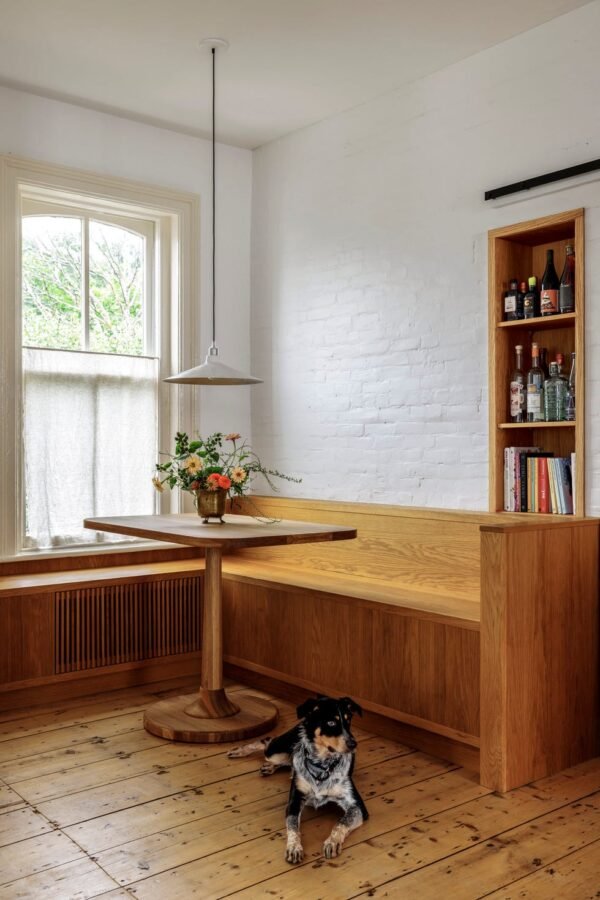
What’s the number one reason why people give up on minimalism before they begin? They take on too much at once.
They decide they’ll declutter everything in a weekend. They get overwhelmed by lunchtime. They give up by Sunday night.
Don’t do that.
Instead, pick one small area. A single drawer. A bedside table. One shelf in your closet. That’s it.
Finish that one spot completely. Throw out what’s broken. Donate what you don’t use. Keep only what belongs there.
This gives you a small victory — and small victories create momentum.
Why Small Starts Work Better
When you complete a small area, your brain receives an incremental dose of satisfaction. That sensation urges you to complete the next area. And then the next.
It’s why people who make their bed every morning tend to be more productive overall. A single small habit reverberates throughout your entire day.
So pick the drawer. Start there.
Tip 2 — Follow the “One In, One Out” Method
This is one of the easiest minimalism tips you’ll ever receive — and one of the most effective.
The rule is precisely as it sounds: when something new enters your home, something old must leave.
Buy a new pair of shoes? Donate an old pair. Get a new mug? Toss a chipped one. Receive a gift? Then give up something else to create space.
This one habit prevents clutter from creeping back in after you’ve cleared it out.
How to Make It Automatic
The trick is to turn this rule into a reflex, not a decision. As new stuff comes in, immediately head to wherever similar things are stored and find something to remove. Don’t wait a week. Do it the same day.
Eventually you also begin to think differently about buying things. You ask: “Is this worth sacrificing something for?” Just that question itself saves a lot of money and space.
Tip 3 — Create a Basic Morning Routine
Minimalism goes beyond just physical stuff. It’s also about how you spend your time.
A chaotic morning starts a stressful day. A calm, simple morning does quite the opposite.
You don’t need some 12-step morning routine involving cold plunges and journaling and meditation. That’s the opposite of simple.
Rather, do 3–5 things that actually help you start the day off right in the same order every morning.
A Bare-Bones Minimalist Morning (Example)
- Wake up — no phone for at least 15 minutes
- Drink a glass of water
- Get dressed (from a pre-planned or capsule wardrobe)
- Eat breakfast without screens
- Look over your 3 most important tasks for today
That’s it. Simple, repeatable, calm.
The less you have to decide in the morning, the more brain power you preserve for things that truly matter.
Tip 4 — Invest in a Capsule Wardrobe (Even if It’s Small)
Your closet is probably one of the biggest daily stressors you never consider.
You open it every morning, look at a heap of clothing, and still somehow feel like you have “nothing to wear.” That’s not a deficiency of clothing — that’s too many options and not enough clarity.
A capsule wardrobe fixes this.
The idea is straightforward: maintain a small collection of versatile pieces that all work nicely together. Every piece earns its place. Nothing stays in your closet for a year without being touched.
How to Build One Without Starting From Scratch
You don’t have to throw everything out tomorrow. Try this instead:
- Take out everything you wore in the last 6 months
- Put aside anything you haven’t worn in a year
- Only keep stuff that fits, you feel good in, and goes with other items
- Donate the rest
Aim for somewhere between 30–40 pieces in total (shoes and outerwear included). Some minimalists go far lower, but this is a comfortable starting point for most people.
When your clothing options have been simplified, getting dressed is a 2-minute choice instead of a 20-minute struggle.
Tip 5 — Stop Buying Things Just to Feel Better
This one might be painful — but it needs to be said.
Much of the clutter is not due to neglect. It stems from shopping as a hobby, as stress relief, or as a way to chase a feeling.
We purchase products with the expectation they will help us feel organized, productive, creative, or happy. Sometimes they will — for a week or so. Then they become another thing to manage.
These minimalism tips are not about being cheap. They’re about being honest.
Questions to Ask Before You Purchase Anything New
Before you click “add to cart” or pick something up in a store, stop and ask:
- Do I really need this, or do I just want the experience of buying it?
- Do I already have something that performs the same function?
- Where will I store this?
- Will I still care about this in 6 months?
This pause does not mean never buying anything. It means buying with intention.
Spending habits truly change over time. You spend less, but you enjoy more.
| Shopping Habit | Effect on Clutter | Effect on Budget |
|---|---|---|
| Impulse buying (no pause) | High clutter buildup | High unnecessary spend |
| Buying with a list only | Medium clutter | Moderate savings |
| Intentional buying (ask questions first) | Low clutter | Low savings |
| Minimalist buying (replace things only) | Very low clutter | Maximum savings |
Tip 6 — Create at Least One Calm Corner in Your Home
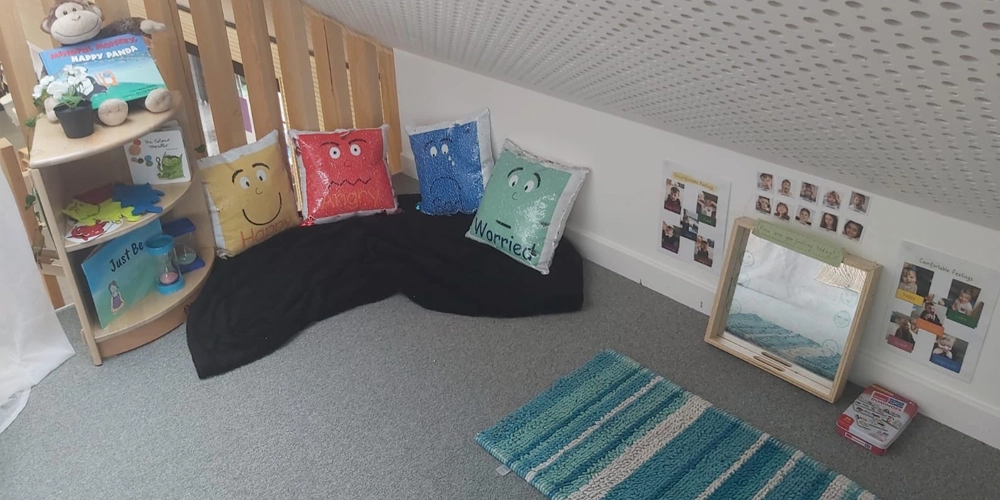
You don’t have to reduce your whole home all at once. But having at least one space that feels truly peaceful makes a world of difference.
This might be a reading chair without anything piled on it. A cleared desk. A corner of your bedroom with just the things you love on display. Even a clean, clear coffee table in the living room.
The key is: this space stays clear. It doesn’t turn into a dump for random junk.
Why a Quiet Corner Transforms Everything
Studies in environment and attention demonstrate that visual clutter fights for your focus. Even if you’re not staring at the mess, your brain notices it as things that remain undone.
A calm corner gives your brain somewhere to rest. You’ll feel your stress level decrease when you sit in or near a space that has nothing extra in it.
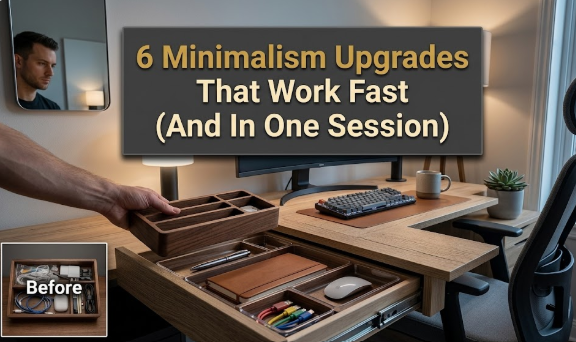
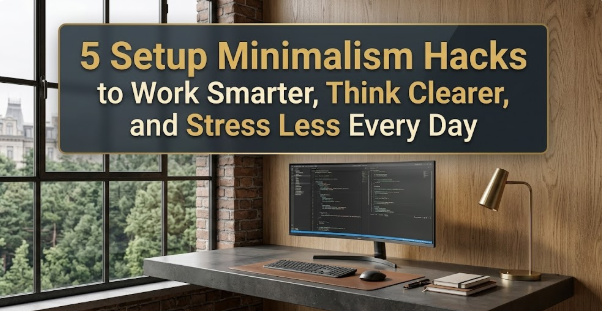
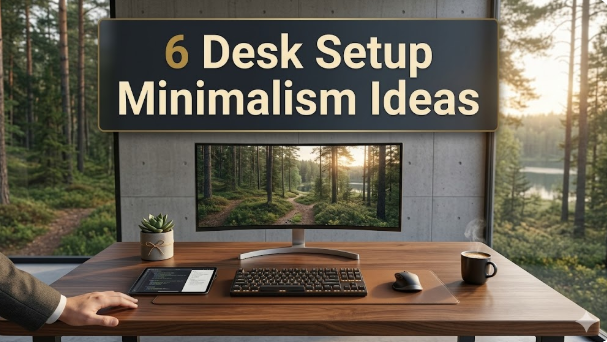
Start with your desk or the space directly next to where you sleep. These two spots have the most impact on your daily peace.
Tip 7 — Embrace Minimalism in Your Digital Life Too
Physical clutter is easy to see. Digital clutter is sneaky.
Your phone has 200 apps. Your laptop has 47 browser tabs open. Your inbox is crammed with 8,000 unread emails. You have 6 streaming subscriptions, but only use 2 of them.
All of that noise affects your focus and your stress — even when you’re placing your phone face-down on the table.
Just like physical minimalism, digital minimalism is important. And the same principles apply.
A Quick Digital Reset Checklist
- Uninstall every app you haven’t opened in 30 days
- Disable all unneeded notifications (allow only calls and messages)
- Unsubscribe from any email lists you never read
- Close every browser tab you’ve had open for longer than 24 hours
- Cancel one streaming or app subscription you hardly use
Do this once a month. It takes about 20–30 minutes, and it genuinely clears mental fog.
If you want to take your digital space further, these habits pair well with a tidy physical workspace to make it all click. An orderly desk supports an orderly mind — and Minimal Workspaces is a wonderful resource to see how your setup can reinforce a simpler, more intentional way of living.
Tip 8 — Have a Monthly “Reset” Session
Minimalism isn’t a one-time project. It’s an ongoing practice.
Even after you’ve done the big declutter, things creep back. Papers collect in piles. Clothes get stuffed into drawers. Countertops fill with random items.
A monthly reset session keeps all of that in check — and it takes less than an hour.
How to Run a Monthly Reset
15 minutes — surfaces and countertops: Walk through each room. Remove anything that doesn’t belong on a surface. Put things away or throw them out.
15 minutes — one problem zone: Choose whatever area accumulated the most clutter that month. Focus your time on that very spot.
15 minutes — digital check-in: Delete downloaded files, clear your desktop, unsubscribe from new email lists, close browser tabs.
5 minutes — the “floating items” sweep: Those stray things strewn around corners, sitting on chairs, or waiting on stairs. Deal with them now.
Keep this session in your calendar. Even once a month counts as 12 resets a year — plenty to keep a minimalist household running smoothly.
Tip 9 — Mindset Shift: You Already Have Enough
No practical minimalism tips in the entire world will stick unless this final one clicks.
The environment we inhabit encourages us to desire more. More clothes, more gadgets, more choices, more things. The entire system is designed for you to feel as if what you possess isn’t quite enough.
Minimalism is a direct counter to that.
It poses a different question: what if what you have is already enough?
Not as a means of giving up or settling. But rather as an honest awakening that the things you already own, the people already in your life, and the space you’ve already created — may in fact be more than sufficient.
How to Practice “Enough” Thinking
- When you want to buy something, list what you already own that is similar
- Once a week, notice three things in your home that you truly love and use
- Before you add anything to a wish list, wait 48 hours and see if you still want it
- Practice saying “I have everything I need for today”
This shift doesn’t happen overnight. But once it begins to settle, everything changes — not just how you arrange your physical environment, but how you feel about your life.
How These 9 Minimalism Tips Work Together
These tips are not meant to be done in isolation. They build on each other.
Beginning with something small (Tip 1) gives you the confidence to take on your wardrobe (Tip 4). The one-in, one-out rule (Tip 2) goes hand in hand with intentional buying (Tip 5). A serene physical space (Tip 6) fosters a serene digital space (Tip 7). And all of this is supported by your monthly reset (Tip 8) and your evolving mindset (Tip 9).
Here is a quick reference to all 9 tips and where to start:
| # | Minimalism Tip | Best Time to Start | Effort Level |
|---|---|---|---|
| 1 | Start with one small area | Today | Very Low |
| 2 | One in, one out rule | With next purchase | Very Low |
| 3 | Build a simple morning routine | Tomorrow morning | Low |
| 4 | Build a capsule wardrobe | This weekend | Medium |
| 5 | Stop buying to feel better | Right now | Low (mindset shift) |
| 6 | Design one calm corner | This week | Low |
| 7 | Apply minimalism to your digital life | Tonight | Low |
| 8 | Do a monthly reset session | End of this month | Low |
| 9 | Shift your mindset to “enough” | Ongoing | Medium (practice) |
The Actual Benefits of Living With Less
Let’s discuss what actually changes when these minimalism tips are applied consistently.
You save money. Once you stop buying things on impulse and only replace what you actually use, you spend significantly less. Most fans of minimalism save hundreds — even thousands — each year.
You save time. It takes a fraction of the time to clean a home with less stuff. Getting dressed from a capsule wardrobe takes less time. There’s less to search through when there are fewer things.
Your stress drops. Visual clutter is a recognized source of stress. Several studies have associated cluttered environments with elevated cortisol levels — the stress hormone. Clearing your space literally calms your nervous system.
You feel more in control. One of the best feelings minimalism creates is a sense of ownership over your life. When your home is intentional, your time is protected, and your digital life is quiet — you feel like you’re running things, as opposed to things being in control of you.
You enjoy what you have more. This is the one that people don’t expect. Without so many things competing for your attention, the things that you do keep become more meaningful. That favorite book, that mug you reach for every day, that clear desk where you sit each morning — it all feels richer when it’s not buried in noise.
FAQs — Minimalism Tips for Beginners
Q: Will I need to get rid of everything to be a minimalist? Not at all. Minimalism is about holding on to what truly enriches your life. There’s no minimum number of possessions needed. The aim is not emptiness, but intentionality.
Q: Where should a minimalist beginner start? Begin with one small, contained space — a drawer, a nightstand, or a bathroom shelf. Completing one small area gives you momentum and shows you what’s possible before taking on larger spaces.
Q: How long does it take to establish a minimalist lifestyle? Depending on how much stuff you have, the first declutter might take a few weekends. But the deep change happens little by little over weeks and months as new habits settle in. Don’t rush it — slower equals stickier.
Q: Won’t minimalism make my home feel cold or empty? Not if you don’t go too far too quickly. Minimalism done right is calming and intentional, not sterile. You keep what brings warmth, personality, and joy — you just stop keeping everything else out of habit or guilt.
Q: What is a capsule wardrobe and how many items should it have? A capsule wardrobe is a small, curated set of versatile clothing pieces that all work well together. For most people, 30–40 pieces (including shoes and outerwear) is a comfortable starting point. Some go lower, others stay a little higher — it’s personal.
Q: How do I stop myself from buying things I don’t need? The best method is the 48-hour rule: if you want to purchase something nonessential, wait two days. Most impulse urges subside within 24 hours. You can also ask: “Do I already have something that does the job?” before making any purchase.
Q: Is minimalism feasible for families with children? Yes — but it looks different. Taking things one room at a time, encouraging kids to help decide what stays and what goes, and designing easy storage systems all work wonders. It won’t be a bare-bones setup, but it can still be a calm and well-organized home.
Q: Are minimalism and frugality the same thing? They overlap but they are not the same thing. Frugality is about spending less money. Minimalism is about having and doing less. You can be a minimalist and still invest in quality things. The difference is purchasing with intention, rather than habit.
Q: How do I maintain a minimalist home without constant effort? The one-in, one-out rule and a monthly reset session (Tip 8) do most of the heavy lifting. Once the initial decluttering is done, maintenance is much easier than people expect — usually 20–30 minutes a month.
Wrapping It Up — Less Is Truly More
Minimalism isn’t a trend. It isn’t an aesthetic for Instagram. It is a subtle but powerful shift in the way you interact with your possessions, your time, and your own mind.
These 9 easy setup minimalism tips are not something you do all at once. Pick one. Do it this week. See how it feels. Then come back and try another.
The goal is not a perfect minimalist home. The aim is a life that feels a little lighter, a little more serene, and far more like your own.