The average person sits at their desk for hours, and yet they think they accomplished nothing.
Sound familiar?
The problem usually isn’t laziness. It’s the setup. Your physical environment, the habits you form and how you choose to set aside your time are critical to whether or not you’ll allow yourself to slip into a state of deep work — or if instead, you get mired in shallow, distractible busyness.
Deep work: The ability to focus without distraction on a cognitively demanding task. It’s the kind of focus that creates your best work — the writing, the code, the designs, the decisions that actually drive things forward.
The good news? You don’t need an expensive office or a complete life transformation. All you need are the proper desk productivity secrets. Here are 11 of them.
Focus lost per interruption
23 min
Productivity loss from multitasking
40%
Deep work sessions pros strive for
90 min
Increase in output with rituals
2–4x
Secret 1
Design Your Desk Trigger — An Indication That It’s Time to Work
Your brain responds to cues. Athletes have pre-game rituals. Chefs have mise en place. You need a desk trigger.
A desk trigger is a small, repeatable action you perform shortly before deep work. It might be putting your notebook to the left of your keyboard. It might be putting on a particular set of headphones. Perhaps it’s lighting a candle or preparing a cup of tea.
The action itself doesn’t matter. The important thing is that you do it every time, without fail, before beginning deep work. Over time, your brain learns: when you do this action, focus time is about to begin. It begins changing gears before you even type a word.
This is one of the most underused desk productivity hacks around. It works because it circumvents the willpower-sapping process of “deciding” to concentrate. The ritual decides for you.
How to create your desk trigger
- Choose a specific small action you can do every time without failure.
- Keep it brief — less than 2 minutes.
- Do it before every deep work session for 2–3 weeks till the habit is formed.
- Never trigger casually — protect its importance.
Secret 2
The “One Screen” Rule That Will Change Everything
Multiple monitors can seem like productivity gold. For certain tasks, they really are. But for deep work in particular, more screens often means more opportunities for your eyes — and your brain — to start to wander.
The one-screen rule is quite straightforward: use only a single application on a single screen during your dedicated deep work block. Everything else is closed. Not minimized. Closed.
This takes away the temptation to alt-tab to email, social media or chat. It keeps your attention where it should be.
If you have reference materials needed for your work, print them or keep them in a notebook at your desk. When it comes to staying focused, physical reference beats a second browser tab every time.
The Productivity Killers That Most Desk Setups Overlook

Before exploring the other secrets, it helps to see what you’re up against. Here are some of the most common desk-level focus-killers:
| Distraction Type | What It Looks Like | How Bad It Is |
|---|---|---|
| Phone on the desk | Notifications, glances, idle scrolling | Very High |
| Browser with 20+ tabs | Visual clutter, easy escape routes | High |
| Noisy environment | Conversations, background noise | High |
| Cluttered desk surface | Visual noise, objects pulling attention | Medium–High |
| Uncomfortable chair/monitor | Physical discomfort breaking flow | Medium |
| Poor lighting | Eye strain, fatigue, drowsiness | Medium |
Secret 3
Put Your Phone in Another Room — Not Face Down
This is not clickbait advice. Researchers at the University of Texas discovered that the presence of your smartphone on your desk — even if it’s face down and in silent mode — significantly impairs available cognitive capacity.
Your brain is working in the background trying not to look at it. That effort costs you focus.
The solution is physical distance. Put your phone in another room during a deep work session. Not your pocket. Not a drawer. Another room. Even having a bag in the corner of the room does less than physical separation.
If you use your phone for work, plan specific check-in times. It should accordingly not be available during deep work blocks.
Secret 4
Time-Block Your Deep Work on Paper — Not an App
Digital calendars are nice for meetings. For deep work sessions, a paper time-block plan sitting on your desk trumps an app every time.
Here’s why: when you write your deep work blocks on paper, they become commitments. You can see them. They’re physical. Crossing one off leaves an authentic feeling of completion that clicking a checkbox never quite achieves.
Have one plain sheet of paper in front of you every day. It should show three things:
- Your block(s) of time for deep work that day — when, and what.
- Your quitting time (when the workday officially ends).
- A single sentence defining what success looks like today.
This is your desk productivity anchor. Glance at it when you drift. It draws you back in without requiring a phone check or an app opening.
Secret 5
Sound Architecture: Design the Correct Sonic Landscape
Sound is easily the most powerful — and most overlooked — aspect of your desk productivity setup.
The goal isn’t silence. Complete silence can make it more difficult to concentrate for many people — small sounds become magnified and annoying. The goal is controlled sound. For a broader look at how environment shapes focus, Minimal Workspaces is a dedicated resource covering how your physical setup affects the way you work.
What works best for deep work
| Sound Type | Best For | Avoid If… |
|---|---|---|
| Brown noise / white noise | Masking environmental sounds, steady focus | You find static irritating |
| Instrumental music (no lyrics) | Creative tasks, writing, design | Your work involves reading/language |
| Binaural beats (40Hz) | Deep analytical focus, coding | You’ve never tried it — test first |
| Nature sounds (rain, forest) | Low-intensity deep work, long sessions | You associate them with sleep |
| Complete silence | Short bursts, high-stakes decisions | You work in a noisy environment |
The key is consistency. Use the same sound environment each time you do deep work. Over time it becomes another cue — your brain hears it and begins shifting into focus mode automatically.
Secret 6
The 90-Minute Block: Follow Your Brain’s Natural Cycle
Your mind does not operate in eight-hour marathons. It works in waves.
Research on ultradian rhythms — the natural 90–120 minute cycles your body operates on — reveals that your brain cycles between high and low alertness throughout the day. Battling those cycles drains you. Working with them multiplies your output.
Structure your deep work in 90-minute blocks with genuine rest in between. Not a coffee refill. Not a quick email check. A real break — a brief walk, 10 minutes of doing nothing, some stretching.
The average person can manage two quality 90-minute deep work blocks per day. Three is possible but demanding. Four are rarely sustainable without burning out.
Less time in deep work, done properly, produces more than twice the output of more hours spent in distracted half-focus.
The Desk Arrangement That Facilitates Flow State

The physical setup is more important than many people think. Here’s how to configure your desk to support sustained deep work:
| Desk Zone | What Should Be Here | What Should Never Be Here |
|---|---|---|
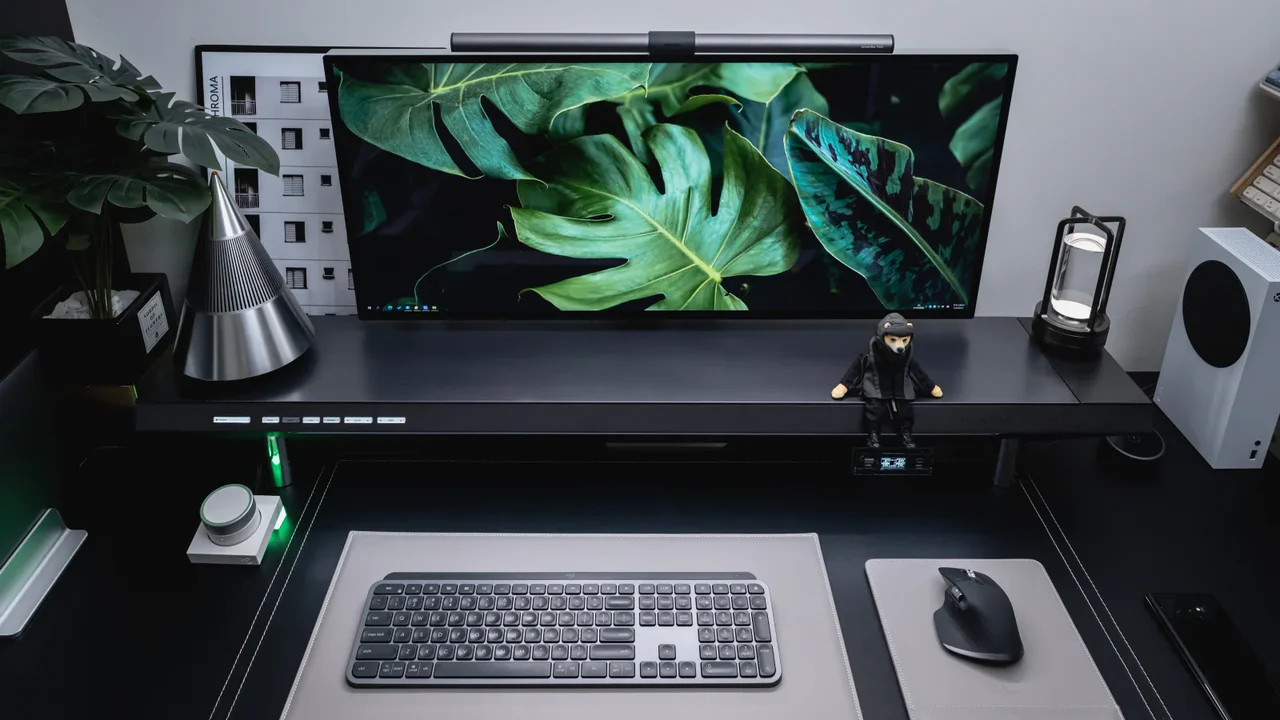
| Prime zone (immediate front) | Monitor, keyboard, mouse — your essential work tools only | Stacks of papers, decorative items, food |
| Secondary zone (within arm’s reach) | Notebook, pen, water bottle, lamp | Phone, remote controls, snacks |
| Edge zone (far sides) | Small plant or other single meaningful object | Anything you’re going to be tempted to touch or look at |
| Off-desk (in drawer or on shelf) | Everything else — chargers, reference books, extras | Anything “just in case” |
Secret 7
The “Capture Sheet” You Need to Free Up Your Mental RAM
One of the worst enemies of deep work isn’t external distraction — it’s internal distraction. Random thoughts that surface mid-session: “I need to respond to that email,” “Don’t forget to pick up groceries,” “What was that thing I wanted to look up?”
Each of these thoughts fights for your attention. If you attempt to act on them, you lose focus. If you try to ignore them, they just keep coming back.
The solution: a capture sheet. Just a piece of paper on the corner of your desk. When a stray thought pops up during a deep work session, write it down in two to five words — then return immediately to your task.
You’re not ignoring the thought. You’re telling your brain: “Noted. We’ll handle it later.” That relieves the mental tension and allows you to refocus immediately. It sounds almost too simple. It’s remarkably effective.
Secret 8
Engineer Your View — What You See Shapes How You Think
What you glance at between moments of work matters. Your eyes automatically scan your surroundings when not fixed on a screen. If they settle on clutter, your brain processes clutter. If they settle on something calm and simple, your brain gets a micro-reset.
Put something calming in your natural line of sight — a small plant, a clean wall, or a window where you can look outside. According to research published by the American Psychological Association, even brief exposure to nature reduces stress hormones and restores attention capacity.
Do not place your desk so that your natural resting gaze is directed toward a heap of work, a cluttered shelf or a busy doorway. These put the brain into task-switching mode even when you’re trying to rest your eyes.
Secret 9
The Shutdown Ritual That Guards Tomorrow’s Focus
How you end your workday is just as important as how you start it.
Without a clear endpoint, work bleeds into the rest of your day. Your brain stays in “on” mode — half-thinking about that task, half composing that email. This low-level activation saps the mental energy required for tomorrow’s deep work blocks.
A shutdown ritual is a 10-minute routine performed at the same time every workday to officially close up shop. It signals to your brain: we’re done. It’s safe to rest.
A simple shutdown ritual
- Review your task list. If anything doesn’t get done, it rolls over to tomorrow.
- Write tomorrow’s one priority — your most important deep work task.
- Close all browser tabs and apps.
- Clear your desk surface to its baseline level.
- Say out loud (yes, really): “Shutdown complete.”
That last step sounds silly until you do it. The spoken word assists your brain in making that shift. It’s as clear a signal as the work bell at a factory — shift over.
Secret 10
Cold Start Tasks: The Secret Weapon Against Desk Procrastination
The “cold start” problem is one of the most significant desk productivity blockers. You sit down. You know what you need to do. Somehow 20 minutes go by and you’ve gotten nothing done.
This is your brain resisting the activation energy needed to begin a difficult task. The solution is lowering the activation cost dramatically.
Use a cold start task. This is a low-friction, two-minute action directly related to your main deep work goal. When writing a report, you don’t “begin writing” — you open the document and write one line. Before coding, you don’t “start coding” — you open the file and read the last function you wrote.
These micro-actions have almost no mental cost. But they get you in the file, in the document, in the problem. And almost invariably, the momentum carries you into real deep work without you even noticing the transition.
Secret 11
Stake Something: Use Commitment Devices to Lock In Deep Work

This is the strongest — and most paradoxical — desk productivity secret on this list.
Commitment devices are external mechanisms that increase the difficulty of abandoning your deep work schedule. They work because they increase the cost of failure beyond “I’ll just try harder tomorrow.”
Examples of effective commitment devices:
- Communicate to a colleague or friend exactly what you’ll complete by a specific time — and have them check in.
- Use an app like Freedom or Cold Turkey to block distracting sites during your deep work block. Schedule the block in advance so future-you can’t reschedule.
- Work at a library or coffee shop where leaving your desk has a social cost.
- Put something on the line — commit to donating money to a cause you dislike if you fail to complete the session.
Commitment devices eliminate the “I’ll just check one thing” escape hatch. They require your future self to show up, even when motivation is low.
Your Deep Work Desk Checklist
Use this before every serious work session:
| Step | Action | Time |
|---|---|---|
| 1 | Phone moved to another room | 30 sec |
| 2 | All browser tabs and apps closed, except work file | 1 min |
| 3 | Paper capture sheet placed on desk | 10 sec |
| 4 | Sound environment activated (noise, music, or silence) | 30 sec |
| 5 | Time block written on paper (task + duration) | 1 min |
| 6 | Desk surface cleared to baseline | 2 min |
| 7 | Desk trigger performed | 1–2 min |
| 8 | Cold start task executed (first 2 minutes) | 2 min |
Total setup time: under 10 minutes. Deep work potential gained: 90 minutes of focused, quality output.
Frequently Asked Questions
Q: What is the difference between deep work and regular work?
Deep work is professional activity performed in a state of distraction-free concentration. Regular work — answering emails, going to meetings, filling out forms — is something we can do while distracted. Deep work cannot. It’s what generates your highest-quality output and most creative thinking.
Q: How long does it take to develop a deep work habit?
The vast majority begin to notice a genuine change in their ability to focus from 2–4 weeks of sustained practice. But like any physical skill, the ability to do deep work develops over months. You should expect to begin with 30-minute sessions, gradually increasing over the months toward 90.
Q: Is it possible to do deep work in an open office?
Yes, but it’s harder. Noise-canceling headphones are essential. Telling the team what your focus blocks are also helps — most people will respect a “deep work: 9am–10:30am” signal. Some workers in open offices have figured out that they can enjoy the quiet they need by showing up before other people or staying late.
Q: My session keeps getting interrupted — what do I do?
For a week, document your interruptions. They tend to come from 2–3 consistent sources (a specific colleague, a certain notification type, family at home). Once you know the sources, you can address each one specifically rather than trying to fight all distractions at once.
Q: Should I do deep work in the morning or the afternoon?
For most people, 2–3 hours after waking are peak cognitive hours. But this varies by individual. Pick out when you naturally feel the sharpest and defend that window for deep work. Avoid scheduling meetings during your most intellectually potent time if you can help it.
Q: How do I do deep work if my desk isn’t perfectly organized?
Not perfect — but clear enough. A completely cluttered desk adds cognitive load and hinders concentration. You don’t have to have a magazine-worthy setup. You need a surface that contains only what you require for the current session, and nothing else fighting for your attention.