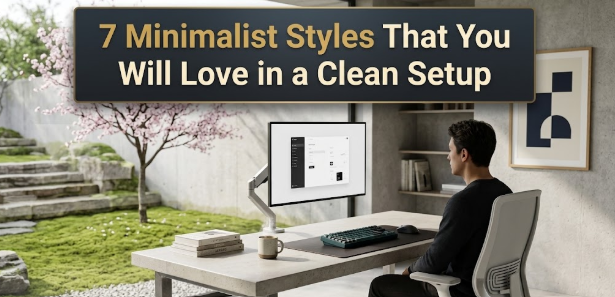
Imagine that you sit down at your desk and feel utterly calm. No clutter. No noise. Just a very clean and simple space that makes you feel like you can work, create and think clearly.
This is precisely what clean setup minimalism provides you with. And the best part? There’s not just one way to do it. Dozens of styles exist — each with its own personality, mood and feel.
Whether your heart sings for warm wood tones, clean white surfaces or moody dark arrangements, there’s a minimalist aesthetic that suits you just right. This guide will go through 7 of the most beloved minimalism styles with a clean setup, what makes each unique and different, and how you can create one yourself.
73%
Reported that they get more work done in a decluttered room
62%
Say a tidy setup lowers their daily stress levels
3x
Less distracted visually and therefore able to concentrate more often
Why You Should Try Clean Setup Minimalism
Before we get into what the styles are, let’s discuss why any of this matters.
A cluttered workspace clamors for your focus. Every object you can see is a little distraction. You notice everything — the pile of papers, the snarl of cables, the empty coffee mugs — and your brain spends mental energy processing what it sees.
A clean environment eliminates all of that noise. What you end up with is room to think. Space to focus. And a setup that really makes you feel good every single day.
Clean setup minimalism is not about owning as little as possible. It’s about possessing only what is useful to you — and ensuring everything has its own home.
“Have nothing in your home that you do not know to be useful or believe to be beautiful.” — William Morris
What All Minimalist Setups Share in Common
No matter how different they may look, every great minimalist setup has a few things in common:
| Core Trait | What It Means in Practice |
|---|---|
| Intentional objects | Everything on the desk has a purpose or brings joy |
| Cable management | Wires are hidden, bundled, or removed entirely |
| Neutral or limited color palette | Usually 2–3 colors maximum in the whole setup |
| Empty surface space | At least 40–50% of the desk surface stays clear |
| Consistent materials | Wood, metal, or fabric — one dominant material per setup |
As we briefly go through each style, remember these five characteristics. You’ll begin to see how they play out differently depending on the look you want.
How to Choose Your Ideal Minimalism Style
Unsure what style is best for you? Here’s a fast-match chart that can help you narrow it down before we get into the details.
| Your Personality | Best Minimalism Style | Stands For |
|---|---|---|
| Clean and bright | Nordic White | A bright white space with lots of natural light |
| Loves a warm and organic feel | Japandi Wood | Warm wood tones, organic textures |
| Adores dark moody vibes | Dark Mode Desk | Low-key black surfaces, RGB or warm lighting |
| Loves tech but not clutter | Techy Monochrome | Grey and silver tones, clean cables |
| Fancies creative vibes | Artisan Minimal | One statement piece, natural materials |
| Finds zen in calm spaces | Zen Neutral | Beige, stone and sand shades |
| Seeks bold yet simple | Accent Color Minimal | One pop of color against neutral colors |
Style 1 — Nordic White: The Classic Clean Setup

1
Nordic White
Bright Beginner Friendly Timeless
The Look and Feel
Nordic White is perhaps the best-known clean setup minimalism style there is. It’s what most people envision when the term minimalist desk setup is mentioned. Think: white desk, white walls, gentle natural light and a few carefully selected belongings.
This is a style rooted in Scandinavian design principles — function first, beauty second and nothing wasted. It is open, airy and quite calm.
The Color Palette
Pure White
Warm White
Ivory
Light Grey
Oak Accent
Must-Have Elements
- Birch desk surface that is white or light
- Simple silhouette, minimal desk lamp
- A small plant — a pothos or succulent is great
- A monitor arm to help keep the desk surface uncluttered
- Beige or light gray keyboard and mouse
- Desk cable management tray
Who This Style Is For
Nordic White is perfect for first-time minimalists. It’s forgiving, relatively easy to build and it works in just about any room. If you work at home and would like a setup that feels both professional and tranquil, this is where to begin.
Starting tip: Paint a wall white, even if the rest of the room is not. A white wall behind your desk both sets a Nordic tone and saves you from a whole-room renovation.
Style 2 — Japandi Wood: Connecting Warmth to Simplicity
2
Japandi Wood
Warm Natural Trending
The Look and Feel
Japandi is a hybrid of Japanese and Scandinavian design. The name is a mashup of “Japan” and “Scandi.” It’s one of the most beautiful clean setup minimalism styles in existence.
Where Nordic White is cool and crisp, Japandi is warm and grounded. It employs natural wood textures, muted earthy hues and artisanal pieces to make a space that is as minimal as it is deeply human.
The Color Palette
Warm Oak
Walnut
Sand
Charcoal
Deep Green
Must-Have Elements
- A solid wood desk — walnut or oak are the gold standard
- Washi tape or bamboo desk accessories
- A ceramic mug holder or pen cup
- A low-profile plant — bonsai, moss ball or ZZ plant
- Desk lamp with paper or linen shade in warm tones
- Thin-bezel monitor or laptop-only setup
The Japandi Design Philosophy
Japanese design embraces the principle of wabi-sabi — which finds beauty in imperfection and impermanence. Scandinavian design is all about lagom — the concept of “just the right amount.” Together they create something incredible: a stripped-down but never cold setup.
Key difference: One object in Japandi setups is often handmade or artisanal. A hand-thrown ceramic dish, a hand-bound journal or a woven coaster brings soul without adding clutter. If you want to go deeper into building intentional spaces like this, Minimal Workspaces is a great resource for inspiration and practical guidance.
Style 3 — Dark Mode Desk: The Moody Minimalist

3
Dark Mode Desk
Bold Dramatic Tech-Forward
The Look and Feel
Dark Mode Desk setups are literally what they sound like. Dark surfaces. Dark peripherals. Controlled, moody lighting. It’s the clean setup minimalism style that swept the internet — and for a good reason.
This style feels powerful. Focused. Like a cockpit designed for getting things done. And for all the dark tones, it’s still a very minimal setup — every item is intentional, every surface remains clear.
The Color Palette
Near Black
Dark Grey
Gunmetal
Silver
Warm Glow
Must-Have Elements
- Dark walnut or black desk surface
- Dark monitor setup — matte finish preferable
- Warm bias lighting behind the monitor (Elgato Key Light or LED strip)
- Black mechanical keyboard with PBT keycaps
- Dark mousepad covering most of the desk
- One accent piece — a dark plant pot, a matte black lamp
Lighting Is the Key to This Style
Lighting in a Dark Mode setup is pivotal. Without proper lighting, this setup looks boring at best and sad at worst. With the right light, it looks cinematic and intentional.
The key is to use warm, indirect light — not harsh overhead lighting. Place an LED strip behind your monitor. Set up a desk lamp using a warm bulb (2700K–3000K color temperature). It gives the surfaces a soft glow that makes them pop without being harsh on your eyes.
Bias lighting tip: Use 3M tape to stick a warm LED strip to the back of your monitor. It minimizes eye strain and makes your setup look professional in photographs and video calls.
Style 4 — Techy Monochrome: Grey Scale Done Well
4
Techy Monochrome
Sleek Modern Precise
The Look and Feel
Techy Monochrome lives in the space between Nordic White and Dark Mode. It uses a full grey spectrum — from near-white to near-black — with silver and brushed metal accents. The effect is sharp, precise and starkly modern.
Think Apple store aesthetic. Clean lines. Brushed aluminium. No warm tones, no natural materials. Just cool, precise and efficient.
The Color Palette
Light Grey
Mid Grey
Slate
Dark Slate
Silver
Must-Have Elements
- Light or mid-grey desk surface
- Monitor and peripherals in space grey or silver
- Aluminium or brushed metal accessories
- Minimal cable routing with grey cable ties or channels
- A grey or white desk mat covering most of the surface
- No plants — this style thrives on zero organic elements
The No-Plant Rule
This may surprise you, but Techy Monochrome setups do tend to look better without any plants. Plants add organic shapes and warm green tones that contrast with the cool, clinical nature of this style.
Instead, you can use a small metal sculpture, an angular desk object or simply leave the space empty. Negative space is an intentional design choice here — not an afterthought.
Style 5 — Artisan Minimal: One Statement, Everything Else Low Key
5
Artisan Minimal
Creative Soulful Unique
The Look and Feel
Artisan Minimal is the most personal of all clean setup minimalism styles. The concept is simple: a single extraordinary object takes the spotlight. Everything else on the desk is there to support it — quietly, without competing.
That statement piece could be anything: a hand-poured concrete lamp, a vintage brass magnifying glass, a signed art print or a beautifully bound notebook. The desk is sparse and simple so that one special object gets full attention.
The Rule of One
Every Artisan Minimal setup follows the Rule of One:
- One statement object
- One color accent (generally taken from the statement object)
- One optional plant or natural element
- Everything else: totally neutral and out of sight
This is the trickiest style to pull off successfully — and the most satisfying when you do. The concept of “one” dictates that you must be ruthlessly selective about what finds its way onto your desk.
Choosing Your Statement Piece
| Category | Example Items | Why It Works |
|---|---|---|
| Lighting | Concrete table lamp, Edison bulb lamp | Both functional and visual at the same time |
| Art | Framed print, ceramic sculpture | Adds personality without overcrowding the surface |
| Writing tools | Fountain pen in a premium holder | Small but instantly elevated |
| Plants | Bonsai tree, moss terrarium | Living, changes with the seasons |
| Books | One beautiful hardcover, face up | Evokes depth and intention |
The test: Put your hand over your statement piece. Does the desk look empty and dull without it? If so, you’ve picked the right piece.
Style 6 — Zen Neutral: The Chill Vibe Setup
6
Zen Neutral
Calming Grounding Mindful
The Look and Feel
Zen Neutral is the clean setup minimalism style created with one purpose: total peace. If Dark Mode feels powerful and Japandi feels warm, Zen Neutral feels like a slow, deep breath.
It relies on the softest neutrals — sand, cream, stone, blush and greige (grey-beige). Nothing sharp. Nothing harsh. Just a color palette that softly conveys peace.
The Color Palette
Cream
Sand
Warm Stone
Greige
Blush
Must-Have Elements
- Neutral linen or cotton desk mat
- A small tray to corral desk items — organizes surfaces
- Candle or diffuser for sensory calm (scent is part of the vibe)
- Stone or ceramic pen holder
- Soft, diffused lighting — no direct harsh light
- One dried flower arrangement or small pampas grass
It Goes Beyond the Desk
Zen Neutral works best when the entire room adheres to the same philosophy. Painting the walls cream or greige, combined with soft textile elements like a linen curtain or a cozy wool rug, completes the sensory environment into which the desk setup becomes integrated.
This is the clean setup minimalism style best known among remote workers who want their workspace to feel nothing like a corporate office.
The Zen Neutral style naturally aligns with mindfulness and focus habits. Many people who go with this setup also start to introduce short meditation breaks, journaling or breathing exercises into their working day.
Style 7 — Accent Color Minimal: Bold but Not Chaotic
7
Accent Color Minimal
Expressive Balanced Modern
The Look and Feel
Accent Color Minimal is for the minimally minded who might find an all-neutral setup a little too quiet. It adheres to a strict formula: an almost entirely neutral foundation with one very deliberate pop of color.
That single color does all the heavy lifting. It lends the setup personality, energy and visual interest — without descending into a messy rainbow of competing tones.
The 90/10 Color Rule
The golden ratio for this style is 90% neutral to 10% accent color. Here’s what that actually looks like in practice:
| Element | Color | Proportion |
|---|---|---|
| Desk surface, walls, monitor | White, grey or beige | ~70% |
| Accessories, mat, frame | Light grey or off-white | ~20% |
| One chosen accent element | Your chosen color | ~10% |
Popular Accent Color Choices
Poppy Red
Steel Blue
Forest Green
Warm Yellow
Violet
Must-Have Elements
- Neutral desk and background (this is non-negotiable)
- One accent item in the color of your choice — lamp shade, plant pot, cable, keycap set
- Repeat the accent color in one other small spot (a pen, a notebook edge, a coaster)
- Keep all other accessories the same neutral tone
Common mistake: Adding 3 or 4 colors and calling them “accents.” That is not Accent Color Minimal — that is just a colorful desk. Stick to one color. Maximum two appearances of that color in the whole setup.
Side-by-Side Style Comparison
Still deciding? Here’s how all 7 clean setup minimalism styles compare across the areas that matter most while building a setup.
| Style | Warmth | Difficulty | Best Room | Budget Level |
|---|---|---|---|---|
| Nordic White | Low–Medium | Easy | Any | Low–Mid |
| Japandi Wood | High | Medium | Home office, bedroom | Mid–High |
| Dark Mode Desk | Low | Medium | Dedicated office, basement | Mid–High |
| Techy Monochrome | Low | Easy–Medium | Modern apartment | Mid |
| Artisan Minimal | Medium | Hard | Creative studio, home office | Varies |
| Zen Neutral | High | Easy | Home office, bedroom | Low–Mid |
| Accent Color Minimal | Medium | Medium | Any | Low–Mid |
Your Setup — The Step-by-Step Process
Regardless of which clean setup minimalism style you choose, the process for creating it is the same. Stick to these steps and you won’t make the classic errors.
Step 1 — Remove Everything First
Take every single item off your desk. Start with a completely bare surface. This is your blank canvas.
Most people skip this step. They try to build a minimalist setup layered on top of a prior disorganized one. It never works. Clear first. Build second.
Step 2 — Select Your Anchor Piece
Every great setup has an anchor — typically the monitor or the desk itself. This is the biggest, most dominating item. Everything else is selected to complement it, not rival it.
Step 3 — Re-Add Items One by One
The key rule: only put an item back if it passes this test.
Put it back if…
- You use it daily
- It matches the color scheme of your style
- It has its own distinct spot
- The desk looks better with it
Leave it out if…
- You haven’t used it in close to a month
- It doesn’t fit the color scheme
- It just sits there looking random
- You only kept it out of old habit
Step 4 — Handle Your Cables
Cable management is hands down the most transformative thing you can do to any desk setup. A lovely desk with messy cables will never look complete.
Use adhesive cable clips to route cables along the desk’s edge. A cable management box underneath the desk conceals power strips and excess cable length. Velcro ties keep everything bundled neatly. According to Wirecutter’s cable management guide, the right combination of clips, channels and ties can transform even the messiest desk into something clean in under an hour. This one adjustment can take a 5/10 setup to a 9/10.
Step 5 — Snap a Photo and Step Back
Snap a photo of your setup and check it out on your phone. What you see in a photo is not at all like what you see in person. The camera strips away all the “feeling” of being in the room — and what’s left is a starkly honest look at what your setup really looks like.
If something looks off in the photo, it is off. Fine-tune until the photo looks clean, balanced and deliberate.
Mistakes That Can Destroy a Minimalist Setup
Too Many “Minimalist” Decorations
Minimalism has become a trend, and that’s created a funny problem: people buying lots of minimalist-looking objects to fill their minimalist desk. If you’re purchasing things to achieve a minimal image on your desk, you’re moving in the wrong direction. Less buying, more removing.
Ignoring the Background
The wall, shelf or curtain behind the desk is just as significant as the desk itself. Even the tidiest desk setup will be ruined by a cluttered bookshelf or a busy patterned wall. Clean the background. It’s half the setup.
Wrong Lighting for the Style
Warm yellow lighting for Dark Mode. Cool white lighting for Zen Neutral. Matching your lighting color temperature to your style is something most beginners overlook — but it makes an enormous difference.
Buying Everything New at Once
Great setups are built slowly. One piece at a time. Purchasing everything in one weekend tends to lead to impulse buys that don’t quite match. Take your time. Curate, don’t rush.
Frequently Asked Questions
What exactly is clean setup minimalism?
Clean setup minimalism is an approach to setting up your workspace that focuses on intentional, necessary items. It centers on uncluttered surfaces, a restricted color scheme, concealed cables and objects that either play an important role or bring genuine pleasure. The intention is a space that is calm, focused and aesthetically balanced.
Which minimalism style is cheapest to achieve?
Nordic White and Zen Neutral are the cheapest styles. Both begin with what you already have — you just remove items, clear your surfaces and adjust your lighting. You don’t have to purchase a new desk or pricey accessories to create either of these looks.
Is it possible to blend two minimalism styles together?
Yes, and a lot of great setups do precisely this. Japandi Wood and Zen Neutral blend beautifully. Nordic White and Accent Color Minimal is another good match. The trick is to ensure that both styles share the same color temperature — either both warm or both cool — otherwise the arrangement will feel visually incoherent.
Is a minimalist setup good for productivity?
Research has shown time and again that cluttered environments raise cognitive load — the mental effort used by your brain to process what it sees. A minimalist setup minimizes that load, which frees up mental energy for doing the real work. People tend to feel more focused, less distracted and less stressed after switching to a clean setup.
How do I maintain a clean setup over time?
The best method is the “one in, one out” rule: every time you bring a new item to your desk, you remove one. Do a 10-minute weekly desk reset where you put everything back in its place, clear any surface clutter and wipe the desk down. That 10-minute habit prevents months of slow backsliding into clutter.
Do I need to purchase a new desk to go minimalist?
Not at all. The biggest changes are what you eliminate, not what you add. An organized existing desk with managed cables will look dramatically better than a new desk cluttered up with stuff. If your current desk is a bold color that clashes with your chosen style, a desk mat can solve that problem for under $30.
Which clean setup minimalism style works best for small spaces?
Nordic White and Techy Monochrome both work brilliantly in small spaces. Light colors visually expand a room. A monitor arm is a particularly useful accessory in small setups — it elevates the monitor off the desk, freeing up significant surface area. Wall-mounted shelves also keep things off the desk while still keeping them accessible.
How many items should be on a minimalist desk?
There is no exact number, but a good guideline is the “five item rule” for the desk surface: monitor or laptop, one lighting source, one writing tool holder, one small plant or object — and that’s it. Everything else goes in drawers, shelves or storage. The less that is visible, the stronger the minimalist effect.