There’s something irresistible about a clean, simple desk. No clutter. No distractions. You, your tools, and your work.
Minimal workspaces have exploded in popularity — and for good reason. Studies show a messy environment leads to greater stress and diminished focus. A clean workspace has the opposite effect. It alerts your brain: it’s time to work.
But minimalism isn’t about owning less. It’s about possessing precisely what you need — and nothing extra.
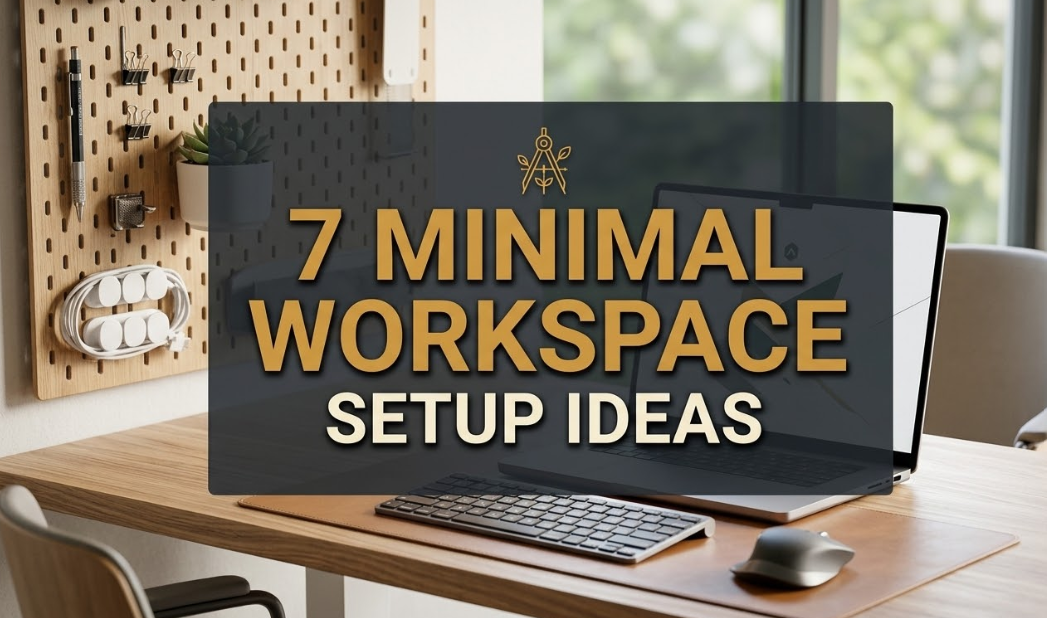
From your stay-at-home setup to your corporate office, this guide walks you through seven necessary minimal workspace configurations. All are practical, budget-friendly, and designed to help you do your best work.
Let’s get into it.
Why Minimal Workspaces Make You More Productive
Before diving into the setups, it helps to understand why minimalism works.
Your brain takes in all that it sees. A stack of papers, a snarl of cable, a dusty coffee mug — they all steal a small piece of your attention. Researchers call this “visual noise.” Over time, this visual noise burdens our mental energy without us actively being aware of it.
A minimal workspace takes that load away. Fewer things to look at means more energy in your brain for the job ahead of you.
1. The One-Monitor Desk — Less Screen, More Depth
The general belief is that more displays equal better productivity. But for deep, concentrated work, a single well-positioned monitor can in fact beat multi-monitor setups.

The concept is simple: one screen, one task, one point of focus.
What You Need
- One big monitor (27–32 inches works well)
- A monitor arm to create more physical space on the desk
- A wireless keyboard and mouse to cut down cable mess
- A pocket notebook or notepad for analog thinking
How to Set It Up
Put your monitor at eye level — the top edge should be just below your eyes. Bolt it to an arm so you can slide it back when not in use, freeing up the full desk surface.
The only things on the desk are what’s in use. The rest goes in a drawer, on a shelf, or off the desk entirely.
This arrangement works particularly well for writers, coders, and anyone who does long, deep work sessions.
2. The Standing Desk Minimal Setup — Move While You Work

All-day sitting is bad for your body. A standing desk setup solves this — and done with a minimalist mindset, it remains effortlessly free from clutter.
The secret behind a standing desk is purposeful design. Because the surface rises and falls, you’re constrained to keep only necessities on top.
What You Need
- An electric or manual standing desk
- An under-surface cable management tray
- An anti-fatigue mat for comfort
- A laptop or space-saving monitor
Smart Tips for This Setup
Take all cables through the desk’s cable tray. Use one power strip with a surge protector and place it under or behind the desk. This removes the “cable spaghetti” look immediately.
Limit your desk surface to three items: your screen, your input device, and one small embellishment (a plant, a glass of water — nothing else).
3. The Laptop-Only Minimal Setup — Portability at Its Best
Sometimes the most minimal setup is the one that fits in a bag.
A laptop-only environment reduces everything to the basics. One device. One charger. Done.
This is great for people who move among places — coffee shops, coworking spaces, libraries, or different rooms at home.
What You Need
- A good laptop (13–15 inch screen is probably best)
- An adjustable laptop stand to raise the screen and improve posture
- A compact Bluetooth keyboard and mouse
- Noise-canceling earbuds or headphones
Making It Work Long-Term
The problem with laptop setups is posture. Using a laptop at desk height turns your neck forward — and over the course of hours, that is just painful.
A laptop stand raises the screen, a separate keyboard keeps your wrists neutral, and the whole setup packs down in less than two minutes.
4. The Floating Shelf Wall Desk — For When Floor Space Is Tight
Living in a small apartment? Working from a bedroom corner? One of the smartest minimal workspace setup ideas for tight spots is a wall-mounted floating shelf desk.
Rather than a floor-hogging desk, you mount a deep shelf directly to the wall. It becomes your workspace — and when you’re finished, the chair tucks under it and disappears into the room.
What You Need
- A floating wall shelf (60–90 cm deep)
- Wall anchors rated for the weight of your setup
- A narrow display or simply a laptop stand
- A small chair or stool that tucks all the way under
Design Tip
Use a different paint color for the wall behind the shelf than the rest of the room. Even a slightly darker neutral tone reinforces a visual “work zone” that helps your brain ideologically distinguish work from rest — even in a single room.
5. The Neutral Color Palette Setup — Design That Soothes
Color has a direct effect on how your brain feels. Vivid, jarring colors rouse and enliven. Neutral tones — whites, beiges, warm grays, soft creams — soothe and center.
A neutral-palette minimal workspace is one of the hottest setups right now — and once you see it pulled off well, it’s easy to understand the allure.
What You Need
- A desk surface that is white, off-white, or light wood
- Matching accessories in neutral hues (desk pad, pen cup, lamp)
- A warm-light desk lamp (2700K–3000K color temperature)
- A single piece of art or a small plant as the sole “accent”
The Rule of Three
In neutral spaces, visual interest comes from texture, not color. Try mixing three textures: something matte (a fabric mousepad), something wood (a small tray or stand), and something metal or ceramic (a pen holder or lamp base). Three materials, all neutral. The result looks intentional and elegant.
6. The Dual-Purpose Minimal Setup — Work and Life in One Space
Not everyone has a dedicated home office. Most people are working from the same spaces in which they eat, unwind, and sleep.
The dual-purpose minimal workspace is meant to serve two roles without any indication that either function is the most dominant presence in the room.
What You Need
- A slim desk that also functions as a console or dining table
- A monitor with a built-in USB hub (for fewer cable connections)
- A “work box” — a small tray or container where all work tools reside
- A cover or cloth to protect the setup when not in use
The Mental Switch Technique
The hardest part of a dual-purpose setup is mentally switching between work mode and home mode. A physical ritual helps.
Once the workday is done, put your tools into the work box, stash it away, and cover the monitor or fold it down. This straightforward physical gesture tells your brain that work is over — even if you simply haven’t retreated to another room.
7. The Nature-Integrated Minimal Setup — Bring the Outside In
The seventh essential minimal workspace setup idea might come as a surprise. It’s not about tech or furniture — it’s biology.
Research consistently shows that exposure to nature, even indirect exposure, lowers stress hormones, enhances mood, and promotes creative thinking. This is known as the “biophilic effect.”
A nature-integrated minimal workspace relies on one or two thoughtfully selected plants, natural light, and natural materials to make a space feel alive — without feeling cluttered.
What You Need
- One or two low-maintenance plants (pothos, snake plant, or a small cactus)
- A workspace located near a window if possible
- Natural material accents: a cork board, a bamboo tray, a wooden monitor stand
- A full-spectrum desk lamp for days with poor natural light
Keeping It Minimal
The problem with plants is adding too many. One vigorous, healthy specimen is far better for your workspace than five struggling ones. Pick one plant that you can actually take care of, sit it where light strikes it directly, and let it do its magic quietly.
Natural materials on the desk — bamboo, cork, light wood — connect to this theme without creating clutter. They replace plastic accessories that perform similar functions but feel harsher and colder.
How to Choose the Minimal Workspace Setup That Is Right for You
With seven options on the table, how do you choose the right one?
It comes down to three questions:
How much space do you have? If you’re working from a small apartment or bedroom, the floating shelf desk or laptop-only setup will be the most practical. With a dedicated room, you have even more choices.
What kind of work do you do? A one-monitor or neutral palette setup is usually ideal for deep, focused work (writing, coding, designing). Active, mobile work suits the laptop-only approach. The standing desk setup is perfect for health-conscious workers who want to move more.
What’s your budget? Some of these setups — the laptop-only and floating shelf desk, for example — require very little investment to pull off. Others — like the standing desk — demand more upfront but pay you back in comfort and health over time.
The Non-Negotiables of Any Minimal Workspace
Regardless of which setup you go for, there are five rules that apply to every minimal workspace setup idea on this list.
Rule 1 — Cable management is mandatory. Visible cables are the arch-nemesis of a minimal desk setup. At the very least, use cable clips and ties to bundle cords and route them out of sight. One knotted cable pile can ruin the neatest desk.
Rule 2 — Storage lives somewhere else. Your desk surface is not storage. If something has no purpose right now, it can’t stay on the desk surface. Give it a home in a drawer, on a shelf, or in a cabinet.
Rule 3 — Clear the desk after each session. A minimal workspace is not a one-time setup. It’s a daily habit. Resetting the desk at the end of each workday takes two minutes and keeps it minimal effortlessly.
Rule 4 — No more than one personal item on the desk. A photograph, a little plant, a favorite mug. Pick one. Not three. One personal item adds warmth. Three adds clutter.
Rule 5 — Lighting is as important as furniture. Bad lighting is hard on your eyes, makes a room look flat, and can make even a clean setup appear dingy. A quality desk lamp with adjustable color temperature can change the entire feel of any workspace.
Common Mistakes to Avoid When Creating Minimal Workspaces
Even with the best intentions, minimal workspaces can go wrong very easily. Here are the most common traps to watch out for.
Buying too many “minimal” accessories. There’s an entire industry dedicated to marketing “minimal” desk accessories. But buying twelve minimalist items doesn’t create a minimal workspace. Buy less. Buy intentionally.
Going too stark and cold. True minimalism isn’t about suffering. If a desk is so bare that it feels uncomfortable, you’ll drift away from using it. One plant, one warm lamp, and one personal item are enough to humanize the space.
Ignoring ergonomics. A minimal workspace that gives you back pain or eye strain is not minimalism — it’s punishment. Set up your monitor height, chair height, and keyboard position correctly.
Letting it creep back. With any minimal setup, the largest challenge is maintenance. Without a regular reset habit (see Rule 3 above), clutter comes sneaking back in quietly. Just a few minutes a day of putting things away is enough.
Frequently Asked Questions
Q: What is a minimal workspace setup? A minimal workspace setup is a desk or work area that only holds the tools and items you actually use. It eliminates distractions, minimizes clutter, and is designed to help you focus and work better.
Q: How can I begin building a minimal workspace on a limited budget? Start with what you already possess. Clear off your desk and then replace only what you use every single day. Good cable management (cable clips are very cheap) and a single lamp will dramatically upgrade an existing desk without investing in new equipment.
Q: Is a minimal workspace possible in a shared living space? Absolutely. The dual-purpose minimal workspace (Setup #6) is specifically designed for shared spaces. The secret is using a “work box” to hold your tools when they’re not in use, and a physical ritual that lets you mentally separate work time from rest time.
Q: Is expensive furniture required for a minimal workspace? No. Some of the best minimalist workstations require very little financial investment. A floating shelf from a hardware store, a secondhand monitor, and a $10 cable management kit can create a clean, functional setup for under $100.
Q: How many items should be on a minimal desk? A good rule of thumb: only things you’ll touch today. For most people, that’s a screen, an input device (keyboard/mouse or laptop), a water bottle or drink, and one personal item. That’s four items. Everything else should have a home that isn’t the desk surface.
Q: Does a minimal workspace really improve productivity? Research supports it. A study in the journal Current Psychology found that people with more cluttered home environments reported higher stress and lower life satisfaction. Other research has associated tidy, organized spaces with greater focus and task completion. The effect is genuine — and it doesn’t take a huge investment to feel the benefits.
Q: Which minimal workspace setup is best for creative work? The nature-integrated setup (Setup #7) tends to work very well for creative work, as natural elements and soft lighting have been shown to support divergent thinking. The neutral color palette setup (Setup #5) also works well because calm environments help sustain long creative sessions without overstimulation.
In Conclusion — Start Small, Start Now
You don’t have to completely redo your entire space to start benefiting from a minimal workspace. Choose one setup from this list that matches your existing situation. Then start there.
Clear the desk. Route the cables. Add the lamp. Place the plant.
The best minimal workspace isn’t the one with the most expensive gear or the biggest social following. It’s the one that keeps you calm, focused, and ready to work — day after day.
Minimal workspaces setup ideas work precisely because they eliminate the friction between you and your best thinking. And that’s a change worth making.